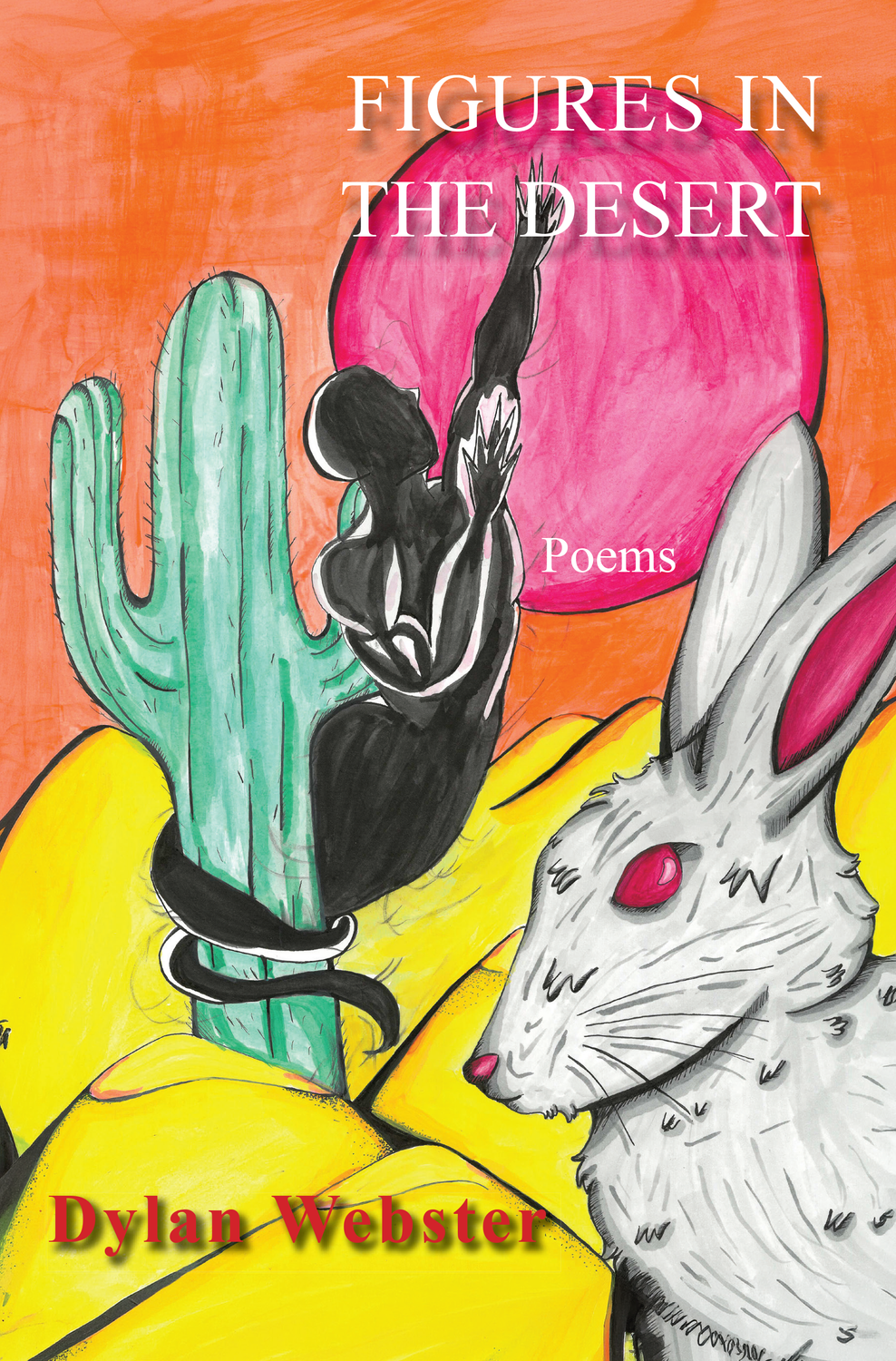
Figures in the Desert
$15.00
Ships beginning November 20, 2
Preorder now!
In stock
Save this product for later
Figures in the Desert
Product Details
UPC: 979-8-950070-10-5
Brand: Seed Bed Press, Inc
Praise for FIGURES IN THE DESERT
Figures in the Desert is a brilliant lesson in dialectical thinking. This collection reflects a world where the horrors of violence, greed, destruction, and generational trauma can be seen on every street corner. At the same time, these poems attempt to “channel hurt / and alchemize pain.” Webster shows us that even if the world is on fire, we can find joy in liminal spaces, that there is beauty in the brokenness, that healing is possible. We can carve out safety in our relationships, in our homes, and in our own bodies. We are vulnerable, but we are powerful, too. We are makers, “fragile / yet strong.”
—Charles K. Carter, author of The God of Loneliness
“What is hardwired in us to heal?” the speaker asks early-on in Dylan Webster’s Figures in the Desert. It’s a worthy question, as these poems explore pain — sun-heated metal searing unsuspecting flesh in the high desert; the house whose every mirror is covered, the better to thwart demonic infestation; the tormented psyche that resides in a trauma-haunted body. The wildfire that consumes a neighboring apartment complex one night appears as hellfire “reclaiming what it’s lost,” while the speaker’s own search for God is a thick, low morning fog. But if this world feels rife with danger and confusion, it also confers opportunities for connection and wonder. As the speaker watches his young son recklessly, joyously dive into the ocean again and again, surfacing with a handful of sea rocks and sand each time, we see it with him: a “game of give and take between god and child,” the kind of cosmic dance that Figures in the Desert invites us all to join.
—Fox Henry Frazier, author of Break Blow Burn and Francesca
“What good is love if it cannot dispel demons?” the poet questions. In Webster’s Figures In The Desert, the demons are abundant and so, too, are vigilant attempts to combat them. The devil is in the details, and those details dwell in the realm of humanity. We wade through fear and despair, discovering what remains after the passage of time. What is permanent? What stays and what flees? Or, perhaps, who flees and what stays? “A misstep here / is invitation – step in.”
—Mark Danowsky, Editor-in-Chief, ONE ART: a journal of poetry
Dylan Webster’s formidable second collection, Figures in the Desert, is a lush chimeric menagerie. In his poems, green-eyed animals jockey for space in the concrete jungles of cities, words turn to leeches, and a seeker on his knees searching for God cousins the parched birds which gulp from riverlets in the poem “Mundane”. The search for meaning is constant and forever, and Webster’s verse exemplifies this, suffers for it. His attention to his poetic lineage—Sylvia Plath, Terrance Hayes, Allen Ginsberg to name a few—is only matched by his devotion to the uncomfortable questions he is willing to ask: what is love, what is God and what is suffering, and what is a landscape if not a space through which countless people, faceless figures, pass through? In these poems, Webster reminds us that a desert—whether literal or metaphorical, whether a search for God or His absence, whether superimposed on briny waves or concrete streets—represents the world, bristling with life despite everything: an abundance of meaning only heightened by acknowledgment of its lack. Webster asks the question, “What language will alleviate suffering?” The answer might just be his own.
—Kathryn Bratt-Pfotenhauer, author of Bad Animal & Small Geometries
Webster builds poems like Cape Cod houses: sturdy and deceptively unadorned, their internal symmetry as surprising as it is inevitable. In Figures in the Desert, he bridges the mundane and sublime, exploring work, poetic praxis, marriage, parenthood, and spirituality in a voice that creaks with late-capitalist anhedonia even as it keens toward the heavens.
—Amy Long author of Codependence: Essays
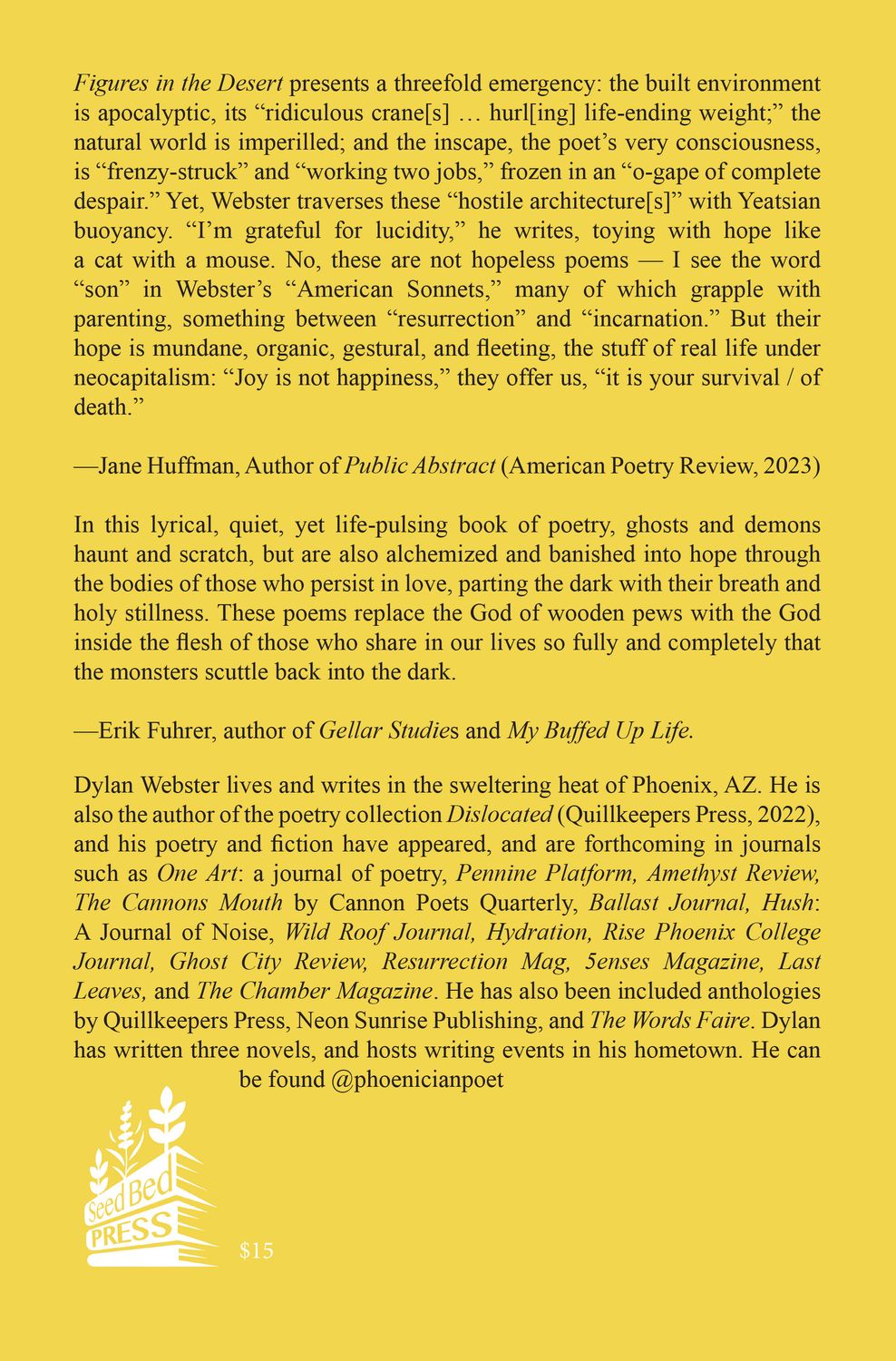
Dylan Webster lives and writes in the sweltering heat of Phoenix, AZ. He is also the author of the poetry collection Dislocated (Quillkeepers Press, 2022), and his poetry and fiction have appeared, and are forthcoming in journals such as One Art: a journal of poetry, Pennine Platform, Amethyst Review, The Cannons Mouth by Cannon Poets Quarterly, Ballast Journal, Hush: A Journal of Noise, Wild Roof Journal, Hydration, Rise Phoenix College Journal, Ghost City Review, Resurrection Mag, 5enses Magazine, Last Leaves, and The Chamber Magazine. He has also been included anthologies by Quillkeepers Press, Neon Sunrise Publishing, and The Words Faire. Dylan has written three novels, and hosts writing events in his hometown. He can be found @phoenicianpoet
You May Also Like
Streets October 30, 2026!
Reel to Real
Reel to Real
Preorder and we will try and deliver before the book debuts nationwide! Orders shipped between Oct 28-30!
SKU Kincaid Jenkins
$15.00
Streets September 29, 2026
A Book of Saturdays
A Book of Saturdays
Preorder and receive the book BEFORE the street date! Ordering early means that the author and the press earn more from their art. Thank you!
SKU Dale Wisely
$15.00
Streets September 15, 2026
Grief is a Place with a Hole Inside
Grief is a Place with a Hole Inside
Preorder to receive your copy AHEAD OF STREET DATE!
SKU Jay Orlando
$15.00

Ships November 15, 2026

Olives Keep Secrets
Olives Keep Secrets
Preorder NOW!
SKU Eugene Stevenson
$15.00